
Recent Posts
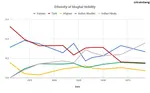













Bihar eastern up is source of all major religions in India post hinduism, >Jainism >Buddhism >Sikhism In fact, same region was hub for North Black Polish Ware culture which coincides with first set of urbanization post fall IVC and it was first ...













Didn't know there was a new Dan Brown novel out bh...
Reading it now. It's great. Feel like I'm back in my school and college days.











Passages

nHHXYH
No.152

Man, the bravest of animals and the one most accustomed to suffering, does not repudiate suffering as such; he desires it, he even seeks it out, provided he is shown a meaning for it, a purpose of suffering. The meaninglessness of suffering, not suffering itself, was the curse that lay over mankind so far – and the ascetic ideal offered man meaning! It was the only meaning offered so far; any meaning is better than none at all … man was saved thereby, he possessed a meaning, he was no longer like a leaf in the wind…he could now will something; no matter at first to what end, why, with what he willed: the will itself was saved.
We can no longer conceal from ourselves what is expressed by all that willing which has taken its direction from the ascetic ideal: this hatred of the human, and even more of the animal, and more still of the material, this horror of the senses, of reason itself, this fear of happiness and beauty, this longing to get away from all appearance, change, becoming, death, wishing, from longing itself – all this means – let us dare to grasp it – a will to nothingness, an aversion to life, a rebellion against the most fundamental presuppositions of life; but it is and remains a will! … And, to repeat in conclusion what I said at the beginning: man would rather will nothingness than not will.
–Friedrich Nietzsche, The Genealogy of Morals III. 28
post passages/aphorisms below.
mMdlAF
No.153

>>152(OP)
>Friedrich Nietzsche, The Genealogy of Morals III. 28
My heart broke here. No originality habbens in lundia. I was happy thinking you wrote this.
nHHXYH
No.154
>>153
soz anon yaara, but this is a rather famous passage, one of my favourites. To write as such, one requires more so of a lively engagement with other such people; this doesn't happen very much outside of a few small circles. The other method is to read – not in a passive '1 book a week' sense but rather let it marinate in your mind, let yourself be absorbed by it for hours, even days on end, like a cow which doesn't digest in one go but rather converts part of it to cud and continues to chew on it. Its a very slow process.